
- 1Dry the area fully
- 2Work sealant into the seam
- 3Check from inside the attic

Where flashing actually leaks
Flashing seals the joints where your roof meets a wall, chimney, or vent, and each type fails differently.
- Step flashingLifts at the edges.
- Counter-flashingRusts and pulls from the mortar line.
- Base flashingCracks at the deck.
- Chimney flashingCorrodes at the seams.
- Valley flashingWears thin where water volume is highest.
- Vent pipe flashingSplits at the rubber boot.
- Skylight flashingSeparates as the sealant ages out.
Leak reappearing away from any joint, on a flat roof? The membrane may be the real issue, and bitumen roof sheets leaking covers that case.
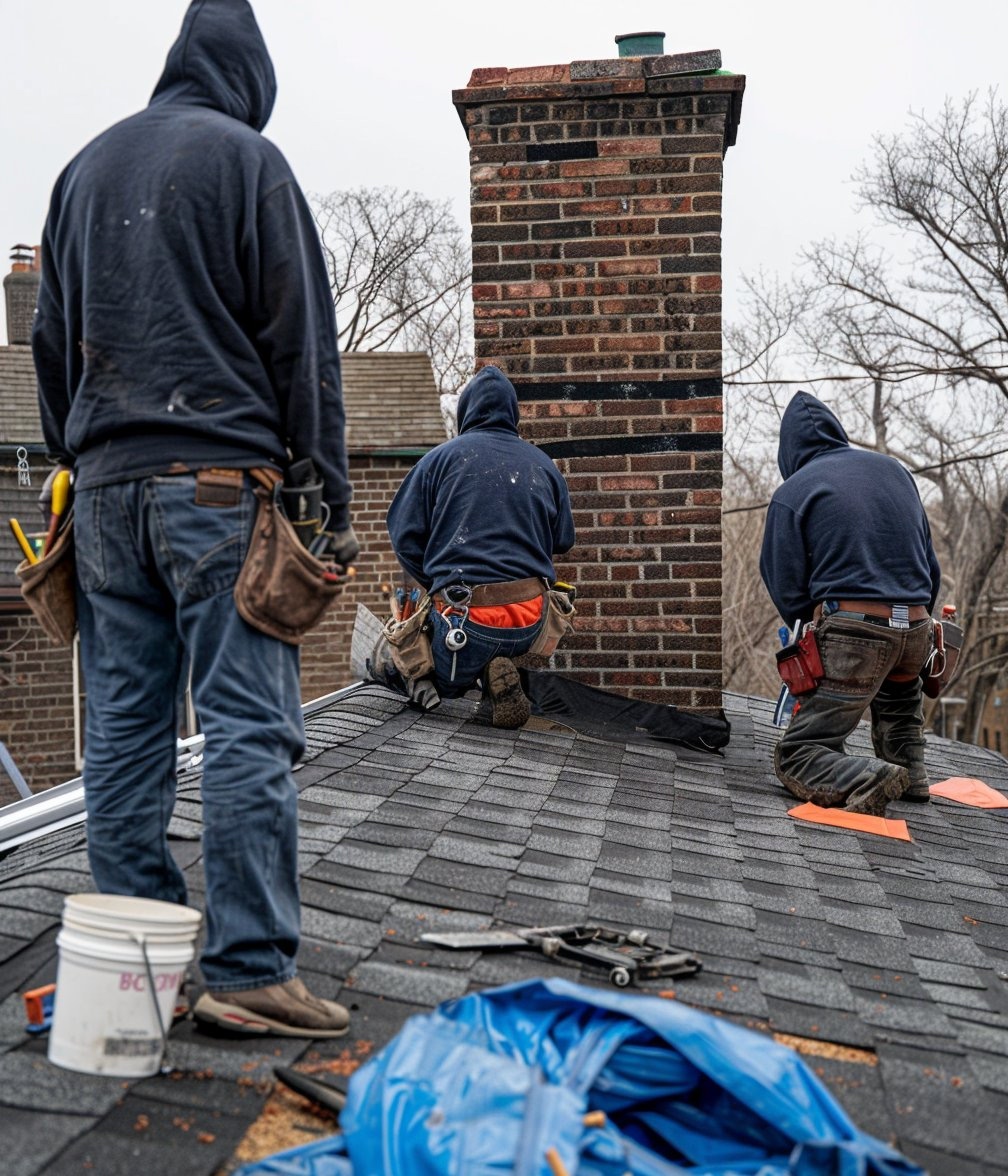 Counter-flashing
Chimney flashing
Step flashing
Signs you have a flashing leak, not something else
Water stains on ceiling
Ring-shaped, near a wall or chimney line.
Damp attic
Insulation wet or musty near a joint.
Missing or lifted flashing
Visible from the ground after a storm.
Cracked sealant or rust streaks
The seal has already failed.
Daylight around chimney or vent
Check from inside the attic.
Granule loss near flashing
Shingles worn thin at the metal edge.
Fix it yourself: the steps
-
01
Locate the leak source
Trace the stain to the actual entry point, often higher up the slope.
-
02
Clear debris from the flashing
Trapped grit holds moisture against the metal.
-
03
Check the flashing's condition
Look for rust-through, cracks, or gaps.
-
04
Dry the area fully
Sealant will not bond to a wet surface.
-
05
Apply roofing cement or sealant
Work it into the seam, not over the top.
-
06
Secure any loose flashing
Refasten lifted edges before sealing.
-
07
Inspect from inside the attic
Run water over the spot and check for new intrusion.
When to stop and call a pro
A patch is a delay once the flashing itself has failed. Call MNM Roofing when:
- The flashing is rusted through or missing
- The same spot leaks again after a patch
- Water has reached the deck or insulation
- The flashing sits somewhere unsafe to reach
An active leak that cannot wait goes straight to emergency roof repair services for same-day dispatch.
Temporary fix vs permanent fix
- Stops water for now
- Needs monitoring
- Often fails at the same seam
- Replaces the failed section
- Ties into the surrounding roofing
- Holds for years
What a professional repair actually involves
MNM Roofing starts with an inspection to confirm where the water actually enters, since the visible damage and the true entry point differ.
- Remove and replace the failed flashing section rather than caulk over it
- Tie in new underlayment and drip edge where needed
- Verify the fix from inside before closing out
Damage running past one section? Replace flashing on roof covers what a full replacement involves.

Backed by our workmanship warranty
Flashing leak questions, answered
 (347) 835-5040
No, not for long. Caulk seals the surface but not the rust or gap underneath, and it tends to fail within a season.
Typically one to two seasons before it needs attention again. It is a hold-over, not a permanent fix on a joint that already failed once.
Not for repair purposes. Flashing is part of the roof system and gets diagnosed the same way. Pricing a full replacement instead? Cost to replace flashing on roof breaks down what that runs.
Yes. Flashing fails the same way on a single-family home, a townhouse, a duplex, or a commercial flat roof, and we handle both.
Get your flashing checked before the next storm
A flashing leak that keeps coming back needs a real fix, not another patch. Call (347) 835-5040 or get a free estimate and MNM Roofing will confirm the source and repair it right the first time.
 Get a free