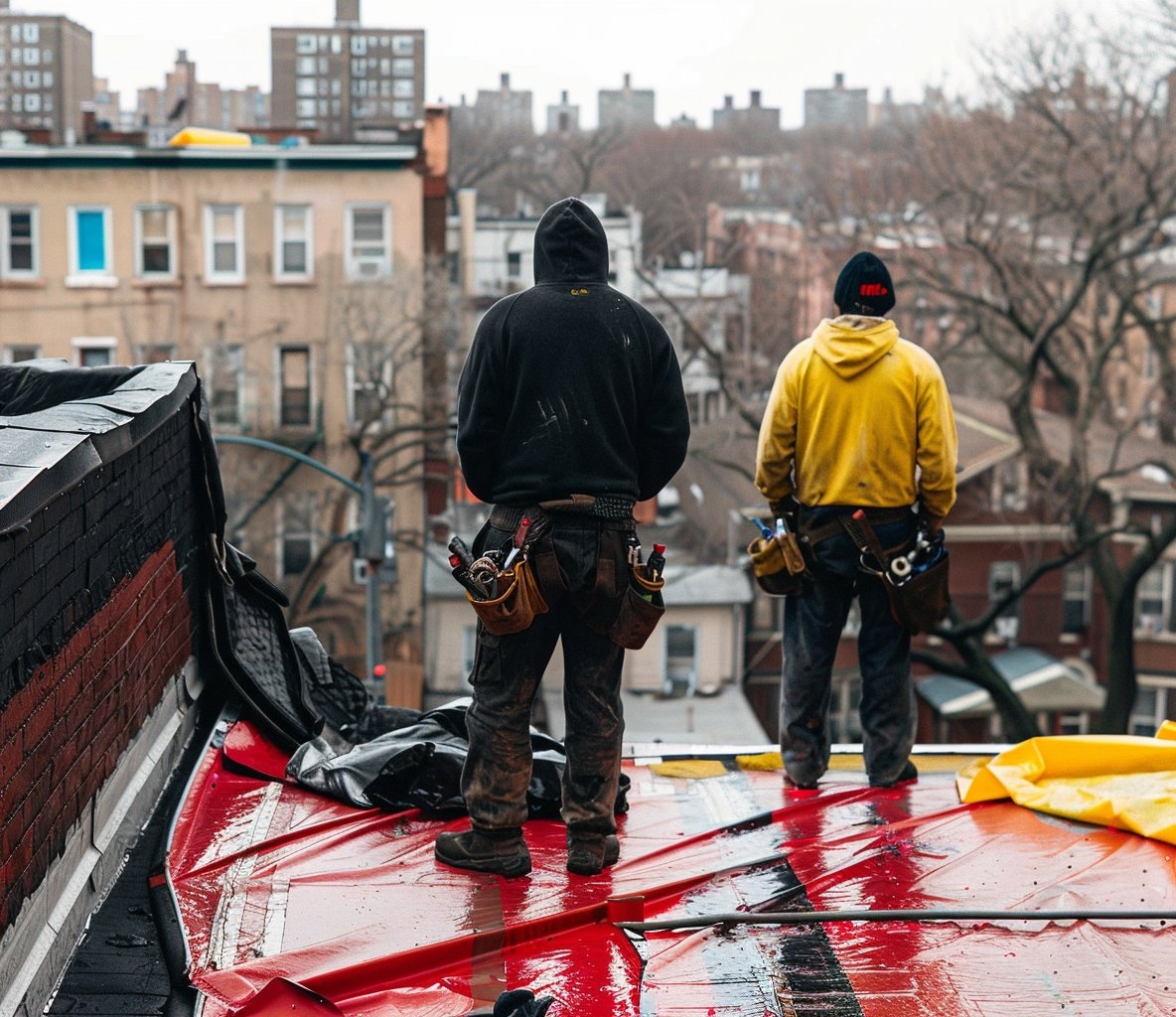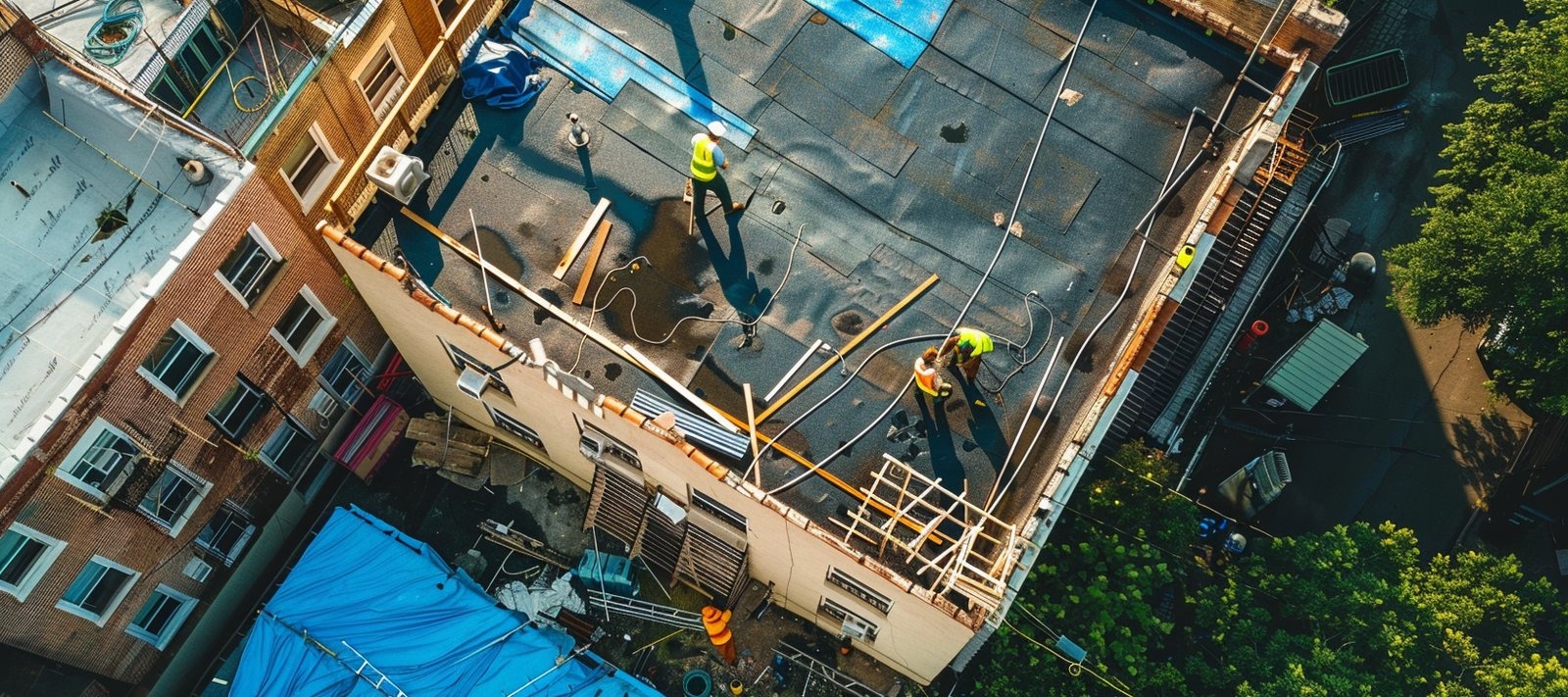

Why a small bitumen problem doesn't stay small
A lifted seam or a soft blister does not stay put. Water works into the gap, the felt underneath soaks it up, and the deck below starts to soften long before anyone sees a stain on the ceiling. Ply separation lets that same water travel sideways under the membrane, so the wet spot inside your building is often nowhere near where the roof actually failed.
Left alone, the aging roof moves faster: more seams open, more granules wash off, and what was a patch job turns into a full section replacement. If you are already watching water come through, our page on diagnosing an active bitumen leak walks through how we trace it back to the source. A repair now protects the deck, the insulation, and everything under the roof from that slow spread.
3
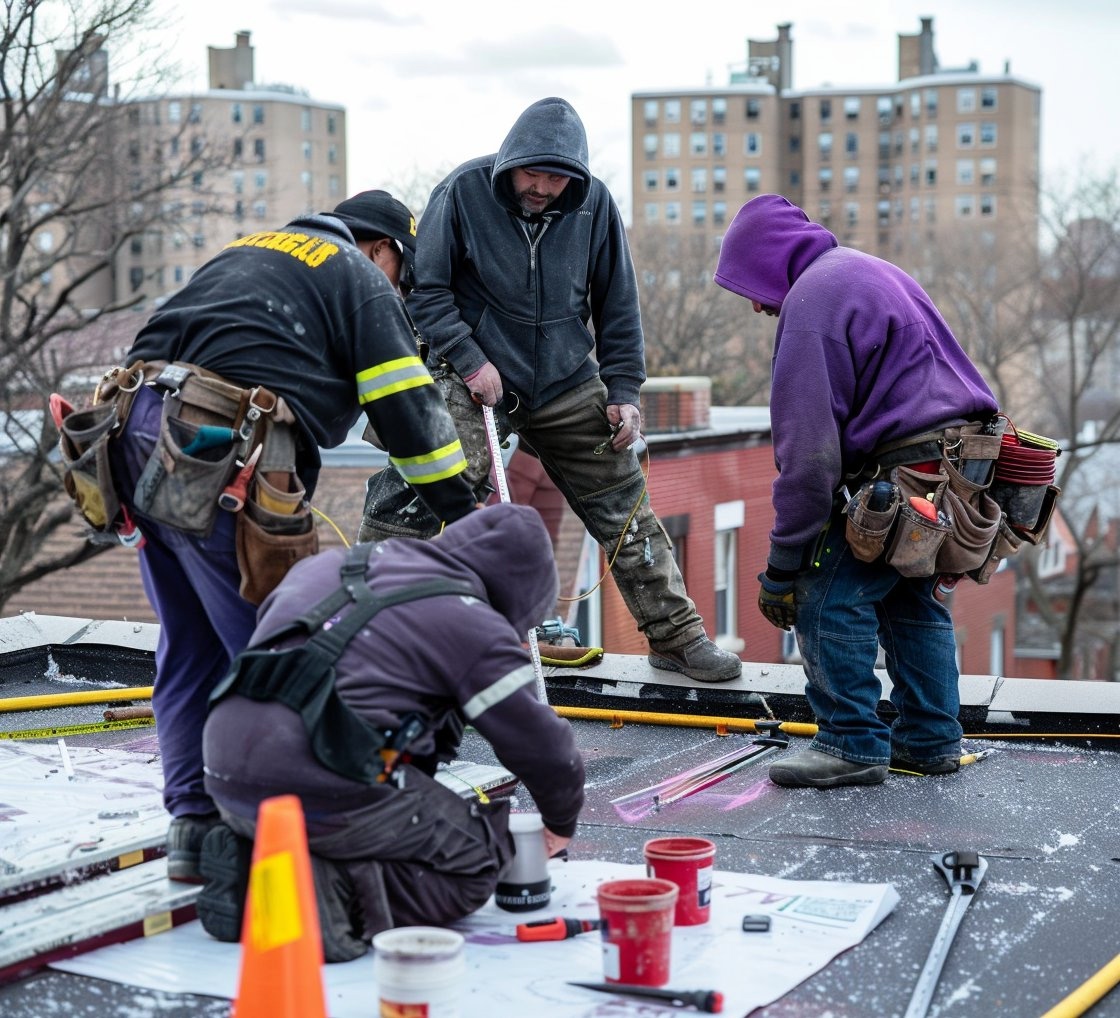
Layers a repair protects

Warning signs you have a bitumen problem
Cracking across the surface
Blistering or bubbling in the membrane
Granules collecting in gutters or on the ground
Exposed felt where the cap sheet has worn through
Seams that have lifted or separated
Water stains spreading across a ceiling
The ways we repair a bitumen roof
We choose the repair method based on what is actually wrong, not a one-size fix.
-
Torch-down patching
Seals a new cap sheet to the old one with heat, which works well on built-up and modified bitumen alike.
-
Cold adhesive application
Does the same job without an open flame, which matters on occupied buildings or tight rooflines.
-
Patch, cap sheet and flashing work
For a lifted seam or a worn section, a membrane patch or a full cap sheet replacement brings that spot back to a weatherproof state. Flashing repair and resealing close off the edges around vents, walls, and roof penetrations, which is where a surprising number of leaks actually start.
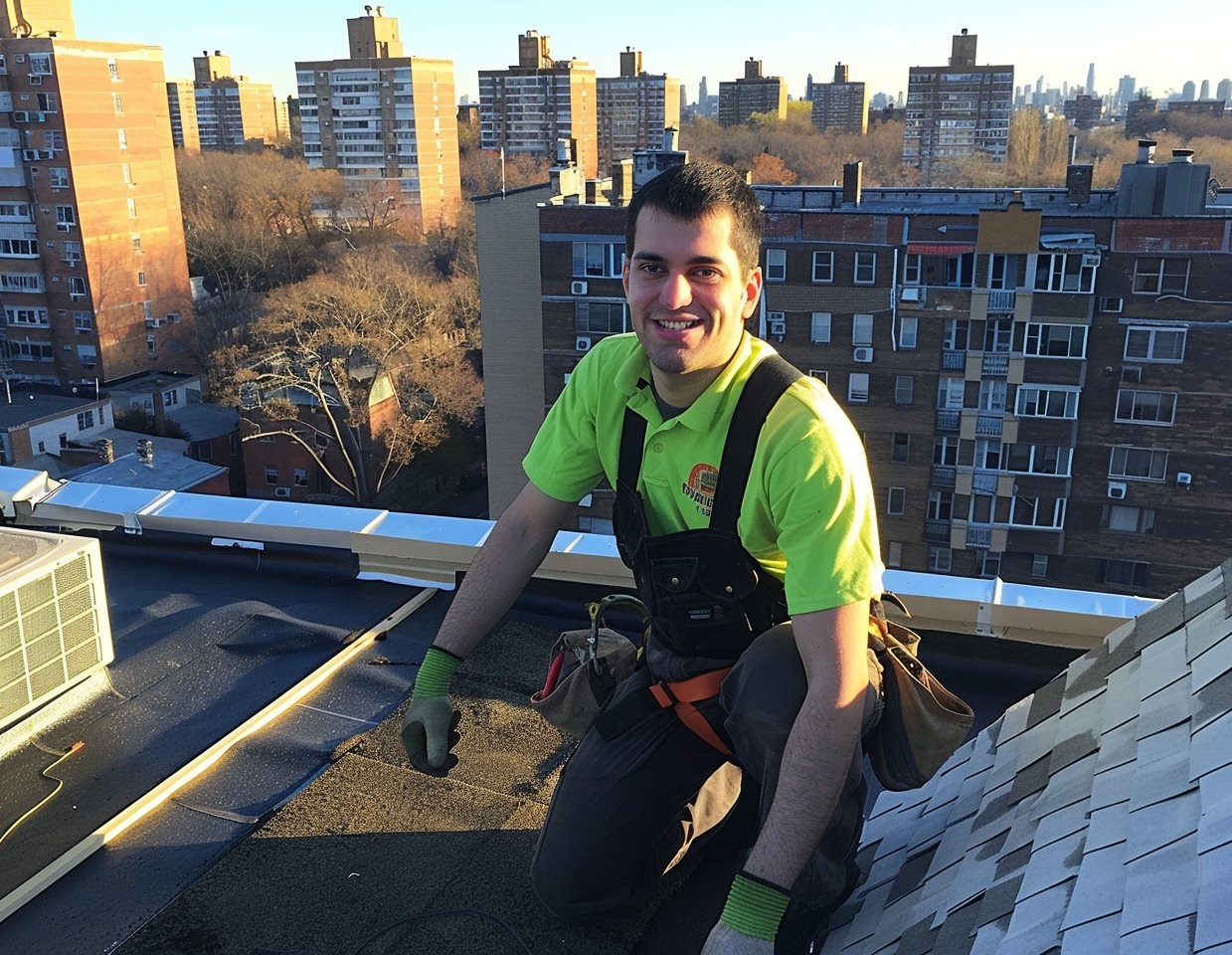
What's included in every repair visit
Inspection of the membrane and all flashing points
The patch, reseal, or cap sheet work itself
A check for ponding water and UV damage elsewhere on the roof
A warranty on the completed work
Ask about what a bitumen repair tends to run when you call. We will not quote a number blind, but we can talk through what drives the price.
Built-up and modified bitumen, both covered
We repair both built-up roofing (BUR) systems and modified bitumen membranes, on whatever kind of building sits under them. That covers residential homes, multi-family properties, apartment buildings, and mixed-use and commercial low-slope roofs across Queens.
- Residential homes
- Multi-family
- Apartment buildings
- Mixed-use
- Commercial low-slope
If the roof has not been looked at in a while, a modified bitumen roof inspection before or after the repair tells you what else is coming.
Bitumen repair questions, answered
 Call now(347) 835-5040
A localized seam, blister, or worn patch gets repaired without touching the rest of the roof, and that covers the majority of calls we get. Full replacement only comes up when the membrane has failed across large sections or the deck underneath is compromised.
We aim for a prompt response, often the same day the call comes in. Active leaks get priority scheduling ahead of routine repairs.
Yes. Every completed repair comes with a warranty on the workmanship, and we will explain its terms before the crew starts.
It means the crew on your roof is covered for the work being done, and you are not carrying that risk. We confirm both before the estimate, not after.
Get your bitumen roof looked at before a small leak becomes a bigger repair
Call MNM Roofing or request a free estimate, and we will schedule a look at the roof, usually the same day. We cover all of Queens, NY, or reach us directly through our contact page.
Serving all of Queens, NY