
The repair in five steps
-
Find the soft spot
01
Press along the area to mark where the deck has failed.
-
Strip the shingles back
02
Expose clean plywood on both sides of the damage.
-
Cut out the bad wood
03
Remove sheathing back to a rafter on each edge.
-
Fit new sheathing
04
Match the original thickness and fasten to the framing.
-
Rebuild the layers
05
Underlayment, flashing, then shingles go back over it.
Six signs your deck is failing, not just your shingles
- A spongy or bouncing feel underfoot
- Sagging visible between rafters from inside the attic
- Dark stains spreading across a ceiling below the roof
- A musty odor in the attic that will not clear
- Daylight showing through the decking from inside
- Granule loss concentrated around one soft area
A bouncing deck or daylight through the sheathing is not a wait-and-see problem. That level of exposure calls for same-day emergency repair, not a spot on next month's list.
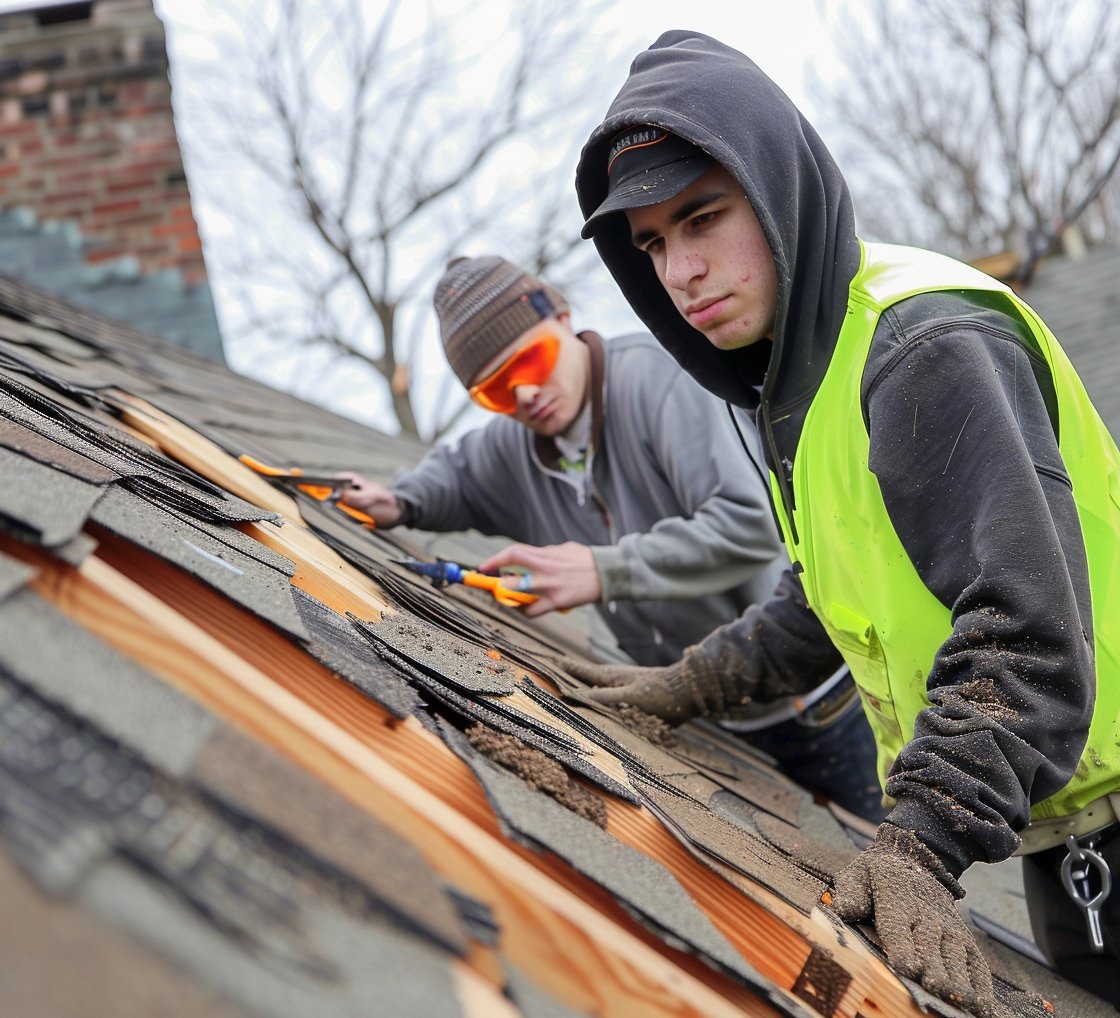
Signs to check first

What actually causes plywood to rot
Water gets under the shingles where two roof planes meet or where a pipe or chimney breaks the surface. Flashing failure at these joints is the leak source behind most rotted decking, not the shingles themselves.
Sheathing does not dry out fast between rains, so moisture soaks into the grain and the layers start to delaminate. By the time a section feels spongy, mold has usually set in and the wood has lost real strength.
That is a structural issue, not a surface stain to paint over.
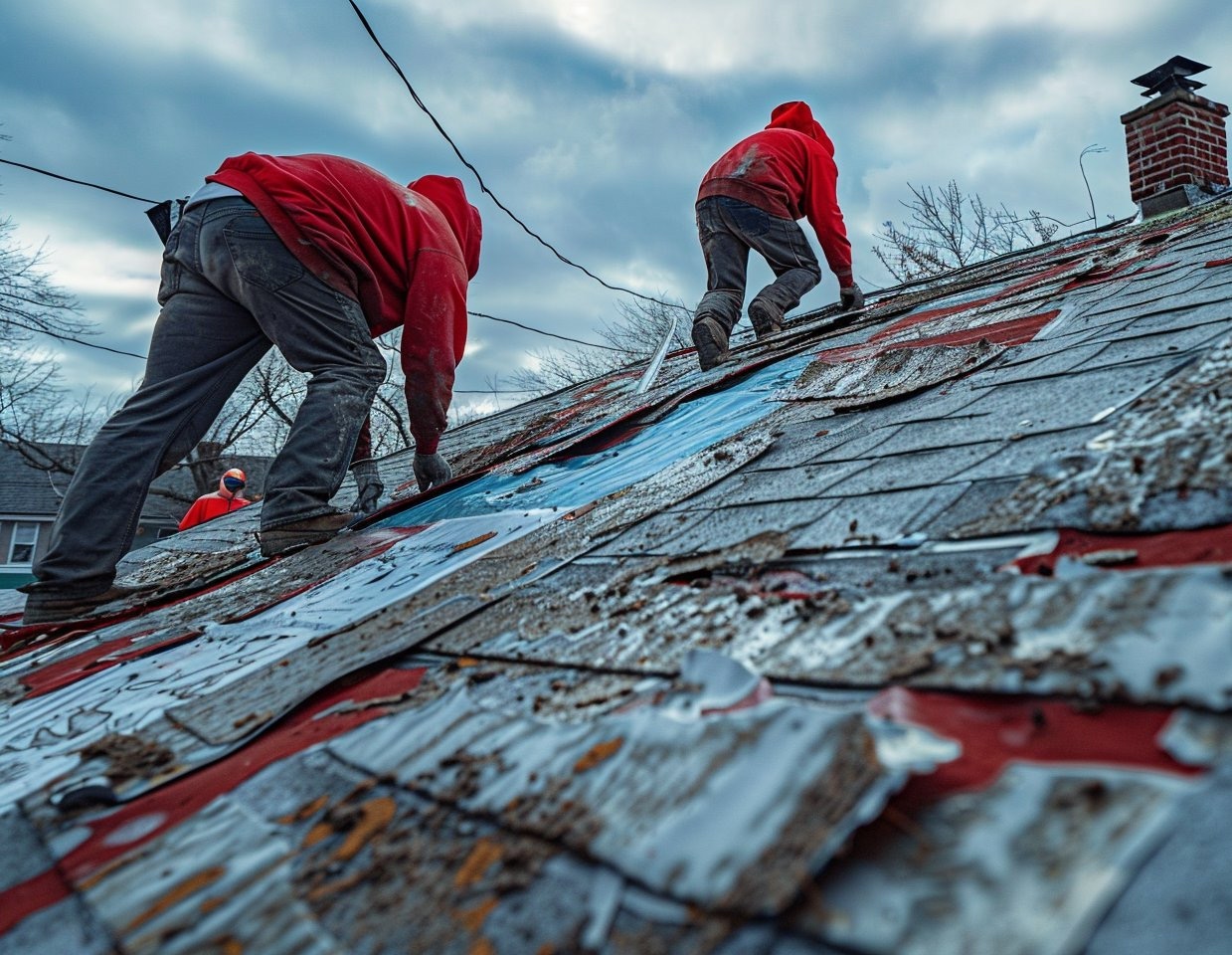
- 1Flashing or shingles let water in
- 2Moisture sits against the plywood
- 3Layers delaminate, mold sets in
- 4The section loses its strength
When a patch works and when it does not
A single small soft spot on a pitched roof you can safely access is a fair candidate for a careful DIY patch, if you can trace and seal the actual leak first. Anything on a low-slope or commercial roof, near a leak you have not traced, or bigger than one sheet needs a structural assessment before anyone starts cutting. Wider decking problems on older wood roofs often fit better under a full wood roof restoration than a single patch.
Five things included in a real repair visit
Inspection first
We trace the leak source before cutting anything.
Tarping when needed
Storm-driven exposure gets tarped and stabilized fast to keep the open deck dry.
Sheathing sized to match
Replacement plywood matches the original deck thickness.
Flashing corrected
The joint that let water in gets re-flashed, not resealed over the same failure.
Full reinstallation
Underlayment, flashing and shingles go back as one system, backed by licensed, insured work and a warranty.
Roof deck repair questions, answered
 (347) 835-5040
A soft or bouncing feel, sagging between rafters, or daylight through the decking all point past the shingles to the deck itself. Shingle-only damage does not sag or give underfoot.
Yes, if the rot is contained and the surrounding wood tests solid. We cut back to sound plywood on all sides before fastening in a new piece.
A single-section repair typically finishes in a day on a single-family or townhouse roof. Larger or multi-family sections take longer.
Sometimes, depending on the cause and your policy terms. Storm damage is more often covered than decking that rotted slowly from a flashing issue nobody caught.
Get your plywood repair estimate
Do not let a soft spot spread past one sheet of plywood. Call MNM Roofing at (347) 835-5040 or request a free estimate below, and we will inspect the deck, trace the leak, and quote the repair.
 Get a free